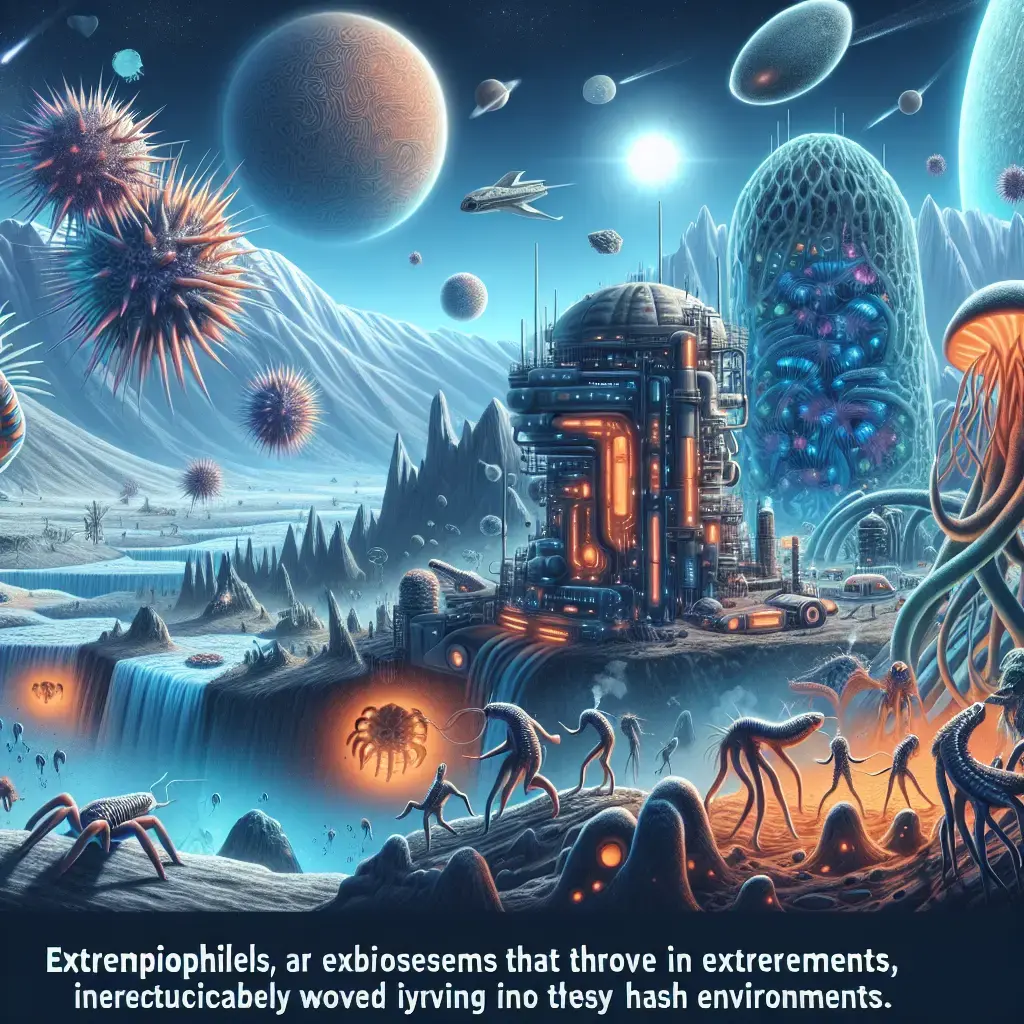
Exploring the Role of Extremophiles in Astrobiology
In the quest to understand the potential for life beyond Earth, extremophiles have emerged as key players in astrobiology and the study of alien ecosystems. These extraordinary organisms thrive in extreme environments, offering invaluable insights into the resilience and adaptability of life. From Mars extremophiles to those found in deep-sea hydrothermal vents, these microbial life forms are more than just scientific curiosities; they are windows into what extraterrestrial life might look like.
The Significance of Extremophile Research
Astrobiologists delve into extremophile research to explore how life can endure extreme conditions that mimic those found on other planets. The knowledge gained from these studies aids in assessing habitability and identifying biosignatures that signal potential alien life. As space exploration ventures deeper into the cosmos, understanding how these organisms survive and thrive could be pivotal in recognizing signs of life on other planets.
Extremophiles as Earth's Testbed for Alien Life
Extremophiles have adapted to some of the most inhospitable environments on Earth, from the scorching temperatures of hydrothermal vents to the frigid deserts of Antarctica. Their ability to thrive under extreme conditions makes them ideal models for studying potential life on other planets. By examining how these organisms survive, scientists can better predict the types of alien ecosystems that might exist in our solar system and beyond.
For instance, Mars extremophiles offer insights into how life might persist on the Red Planet. With its thin atmosphere and high radiation levels, Mars presents an environment similar to that of certain arid regions on Earth where extremophiles have been discovered. Recent research indicates that these organisms could potentially survive beneath the Martian surface, shielded from harsh surface conditions source.
Implications for Space Missions
Addressing Ethical Dilemmas in Planetary Exploration
Missions to explore other worlds, such as Mars or Saturn’s moon Titan, face a paradoxical challenge: the very act of searching for life could disrupt or destroy it. Instruments designed to detect biosignatures or habitability may inadvertently harm fragile ecosystems that might exist on these celestial bodies. This ethical dilemma underscores the importance of extremophile research as scientists strive to design exploration tools that minimize ecological impact while maximizing data collection source.
Investigating Titan's Potential for Life
On Titan, extremophiles that thrive in cold environments provide a framework for understanding potential life forms. Titan's thick atmosphere and surface lakes of liquid methane present a unique set of challenges and opportunities for life as we know it. By studying Earth-based extremophiles that metabolize in similar conditions, researchers can refine their models for extraterrestrial life on Titan source.
Europa and Enceladus: Oceans Beneath the Ice
Recent discoveries have heightened interest in Europa and Enceladus as promising candidates for hosting alien life. Both moons have subsurface oceans beneath their icy crusts, where conditions might be conducive to life. A NASA experiment suggests that if these oceans support life, signatures in the form of organic molecules like amino acids could be found near the surface source.
Extremophiles living near deep-sea hydrothermal vents on Earth provide a glimpse into how life might thrive in these alien oceans. These organisms utilize chemosynthesis, converting chemical energy from hydrothermal vents into biological energy—a process that could similarly occur on Europa and Enceladus source. Understanding these deep-sea extremophiles helps astrobiologists develop strategies for detecting signs of life on these moons.
The Broader Implications of Astrobiological Studies
Challenging Traditional Views on Habitability
The study of extremophiles not only informs our understanding of potential alien life but also challenges our perceptions of habitability. Traditional views limited life's existence to narrow environmental conditions; however, extremophiles demonstrate life's capacity to adapt far beyond these bounds. As a result, astrobiological studies encourage us to broaden our search parameters when looking for biosignatures on other planets source.
Integrating Evolutionary Biology
Incorporating evolutionary biology into these studies further enriches our understanding by providing context on how life evolves under extreme conditions. This knowledge aids in developing predictive models for where and how we might find extraterrestrial life source.
Challenges and Opportunities in Space Colonization
The conversation surrounding space colonization by figures like Elon Musk and Jeff Bezos also intersects with extremophile research. Musk's vision of colonizing Mars involves creating habitable environments on a planet known for its extreme conditions—similar to those faced by extremophiles on Earth source. By studying how microbial life adapts and survives in extreme environments, we can gain insights into sustainable living practices for human colonies.
Conversely, Jeff Bezos envisions building space habitats that simulate Earth's environment. While this approach may avoid some ecological disruptions posed by colonizing existing celestial bodies, understanding how extremophiles adapt could still inform the design of robust ecosystems capable of supporting human life source.
The Future of Astrobiological Exploration
As we delve deeper into space exploration, the role of extremophiles in understanding alien ecosystems remains pivotal. Each new discovery brings us closer to answering fundamental questions about life beyond Earth. While recent studies suggest dim odds for finding advanced alien civilizations source, the presence of microbial life—or its signatures—remains a promising prospect.
The discovery of a new supergiant-rich stellar cluster, Barbá 2, exemplifies the vastness and complexity of our universe source. As we continue to explore these frontiers, extremophile research will guide us in interpreting potential biosignatures and assessing habitability across diverse environments.
The James Webb Space Telescope's recent findings about Ariel, a moon of Uranus with potential hidden oceans source, underscore the importance of looking beyond traditional celestial bodies for signs of life.
Conclusion: Embracing Extremophiles in Our Quest for Alien Life
Extremophiles provide invaluable insights into the potential for life beyond Earth. By studying these resilient organisms, we uncover how life might adapt in the extreme environments of other celestial bodies. Here are the key takeaways from our exploration:
Understanding Potential Alien Ecosystems: Extremophiles serve as Earth's testbed for examining how life could survive on planets like Mars and moons such as Titan, Europa, and Enceladus.
Implications for Space Missions: Research on extremophiles guides the design of exploration tools that aim to detect biosignatures while minimizing ecological disruption.
Broader Astrobiological Insights: Extremophiles challenge traditional views of habitability, encouraging a broader search for life across diverse environments.
Space Colonization Challenges: The adaptation strategies of extremophiles inform sustainable practices for potential human colonies in space.
As we continue to unravel the mysteries of our universe, extremophile research remains pivotal. It not only informs the search for microbial life but also enriches our understanding of life's resilience and adaptability. This knowledge could one day assist in humanity's own journey into space, whether through colonization or the discovery of extraterrestrial ecosystems.
In closing, I invite you to reflect on how extremophiles have reshaped our understanding of life's possibilities. How might these discoveries impact our future exploration and colonization efforts? Share your thoughts and insights in the comments below. Together, let us continue this fascinating journey toward understanding life beyond Earth.
Author: Harper Bennett